

London P1: a view from the stands
By Minter Dial
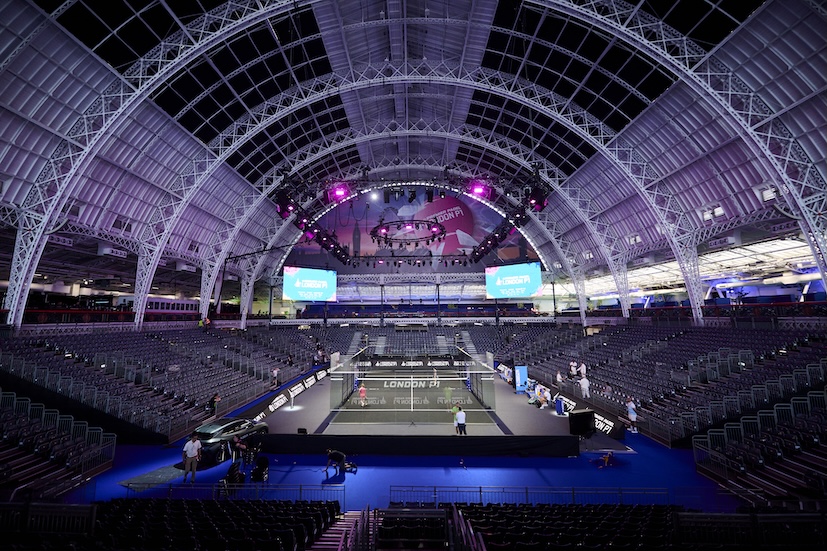
This week Premier Padel arrived on British soil for the first time, bringing its particular blend of world-class sporting intensity, Latin flair and padel camaraderie to the £1.3 billion newly refurbished Kensington Olympia.
The venue is impressively configured for the P1 tournament (comparable to the ATP or WTA 1000 in tennis): four tournament courts, including a 4,000-seat Centre Court; two practice courts and a lively gallery of padel-specific shops, food, drink and entertainment.
There was a palpable sense that something important was afoot: a landmark occasion not just for professional padel, but for the game’s growing community in Great Britain.
Draw and qualifying rounds
Opening day (August 2) began with the first qualifying matches and the official draw for the main tournament. Held in the press room, the draw was conducted by Britain’s two highest-ranked women: Aimee Gibson (world No 101) and Catherine Rose (No 97). The women’s draw featured 32 pairs, followed by a 64-pair men’s draw.
For the British contingent competing in qualifiers, it was a tough but valuable initiation into the depth of the international game.
On the women’s side, Tia Norton (No 139), partnering Belgium’s Helena Wychaert (No 201), fought hard but lost 4–6, 4–6 to the fourth-seeded qualifying pair.
In the men’s draw, Cameron Dollimore (No 296) and Theo Garton (No 305) came up against a strong Spanish duo. After a chastening first set, they settled admirably, going toe-to-toe in the second before narrowly losing the tie-break 0–6, 6–7 (3). There will be plenty to take away from that experience.
Jaime Lobo-Wordsworth (No 359) and teenage prospect Ben Philipps (No 635) lost 1–6, 2–6 to a Dutch-Swedish pair, who themselves went on to contest – and lose – a fiercely fought three-set match in the next round of qualifying.
Overall, the Spanish and Argentinians’ dominance is evident even at qualifying level. Of the players in the quails who reached the main draw, just six came from elsewhere: two French, two Italian, one Belgian and one Paraguayan.
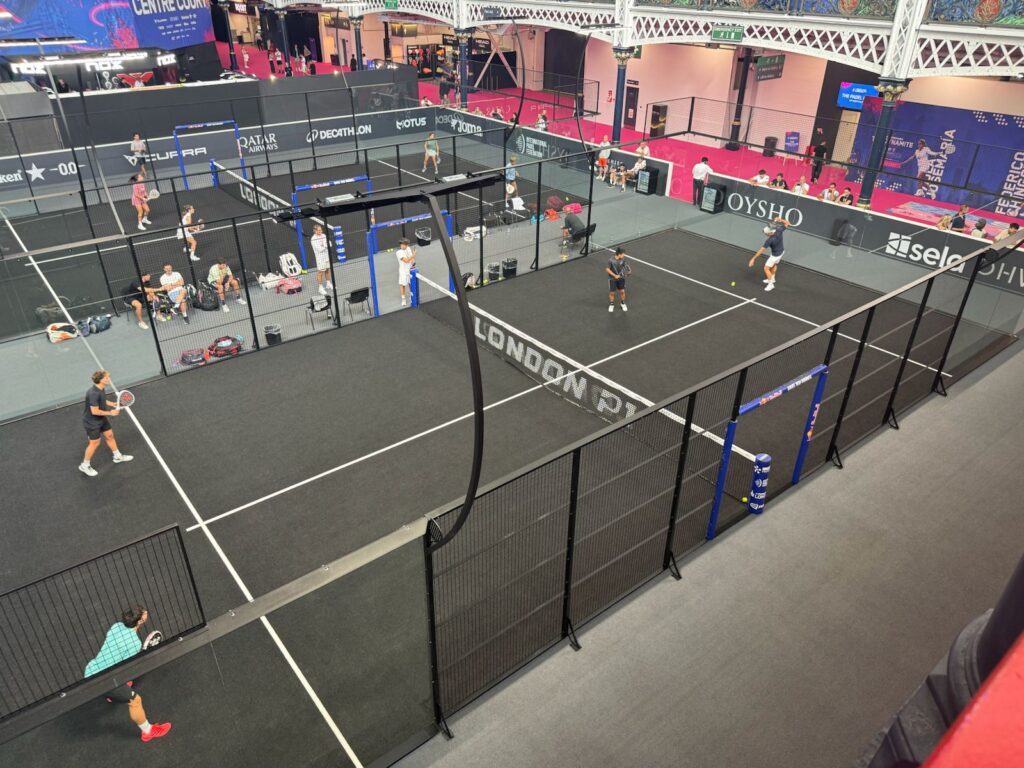
A view from the practice courts
Tuesday marked the start of the main draw and the first Centre Court matches. The cavernous roof at Olympia is strikingly high — high enough to allow some wonderfully audacious lobs, or pinchados, as they are known in Spanish.
Yet, for me, the most compelling feature of the day was not only the Centre Court. It was the practice courts.
To stand just metres from the best players in the world, watching them train with a focus, precision and intensity that most amateur players rarely encounter, was a real joy. I was able to observe the drills, the areas they want to sharpen, the seriousness of the warm-up and the subtle ways pairs collaborate across the net.
I watched fourth seeds Claudia Fernández and Martina Calvo — finalists at the recent Pretoria P1 — doing dedicated practice of their lobs. As a signal of the importance of the lob (el globo in Spanish), they were calibrating the height, depth and trajectory with unnerving consistency. Their lobs were not merely defensive resets; they were (and are) precise, purposeful weapons.
It was a useful reminder for all of us club players: at the top level, even the seemingly simple shots are anything but simple.
British hopes, hard lessons
Five Britons received wild cards in to the main draw, and the home crowd had plenty to cheer about — including one British player progressing to the next round.
Playing on the Centre Court, Chris Salisbury (No 718) and Alfonso Patacho (No 874) faced Argentina’s Juan Belluati (No 78) and Ignacio Piotto (No 47). They lost 2–6, 4–6, but the scoreline does not capture the whole contest. The British pair broke serve and led 4–2 in the second set – much to the delight of the crowd – before their experienced opponents found another gear.
Afterwards, Chris spoke of how they felt competitive in the match. He also relished the experience of having played against such opponents. Despite his prior experience of playing tennis before crowds, he admitted that it took a set to settle into this particular environment against these opponents. That, too, is part of the leap to this level.
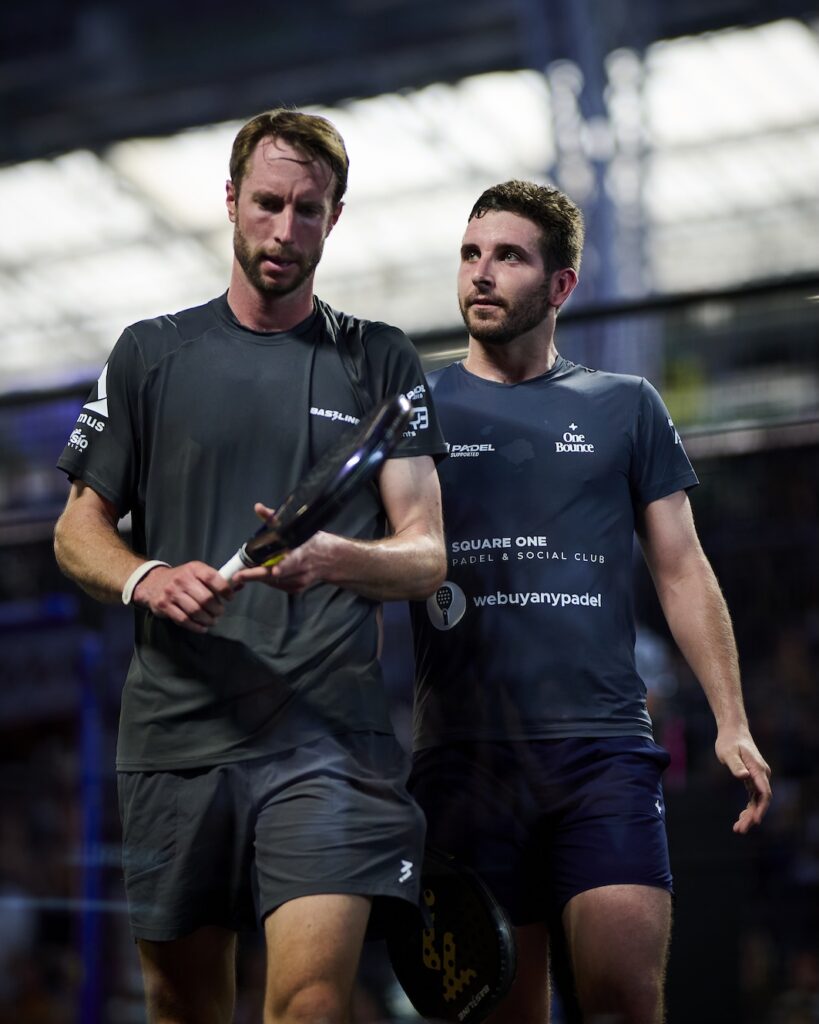
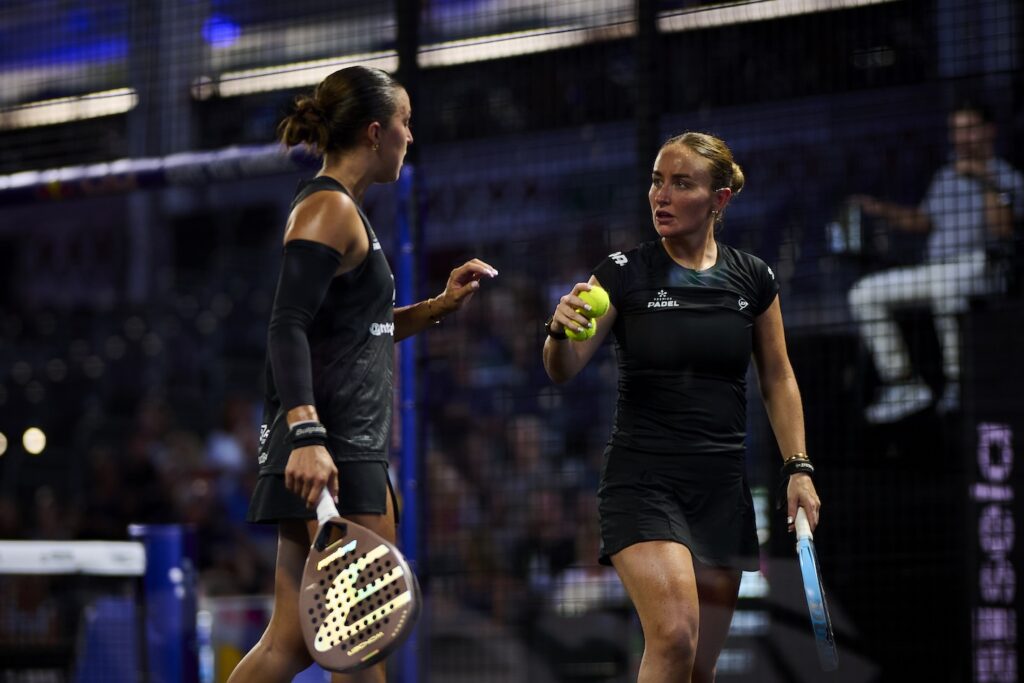
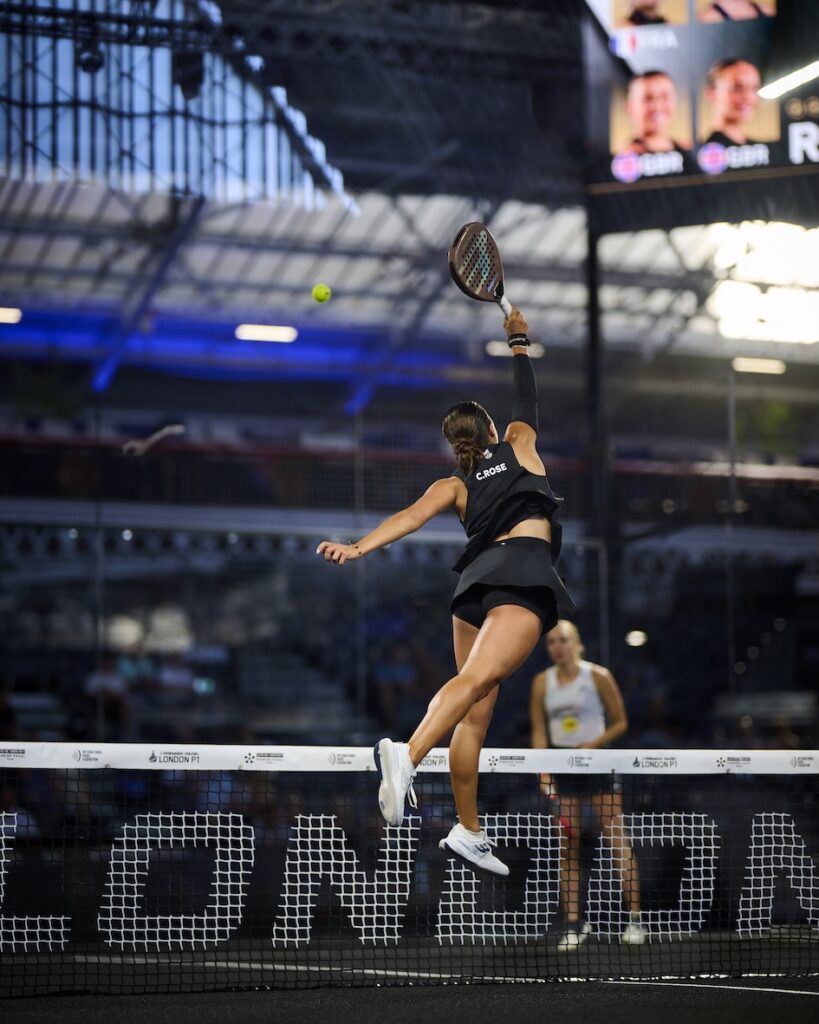
Again on Centre Court, Aimee Gibson* and Catherine Rose gave a valiant account of themselves against Russia’s Ksenia Sharifova* (No 34) and France’s Alix Collombon* (No 37). The British pair lost 1–6, 6–7 (5). The second set was highly competitive and exciting and might easily have gone the other way. They should be proud of their effort.
Elsewhere on the men’s side, Louie Harris (No 272), playing with Francisco Jurado (No 183), lost 3–6, 2–6 to Santiago Pineda (No 95) and Javier Ruiz (No 44). Given the disparity in rankings, this was a solid performance.
Fine margins of elite padel
Matches I attended revealed one of the harsher truths of professional padel. Against seasoned pros, simply returning the ball or ‘making it difficult’ is rarely enough. Within each point, one has to choose the moment, accept the risk and go for the win. The difference lies in being decisive and incisive — and, naturally, that is much easier to say from the stands than to execute under pressure.
Four out of five home players may have exited the main draw early, but their performances offered a valuable glimpse of what is required to bridge the gap. Exposure to this standard of competition matters. So does the belief that, with the right investment, competition and patience, British players can narrow that gap.
A buoyant beginning
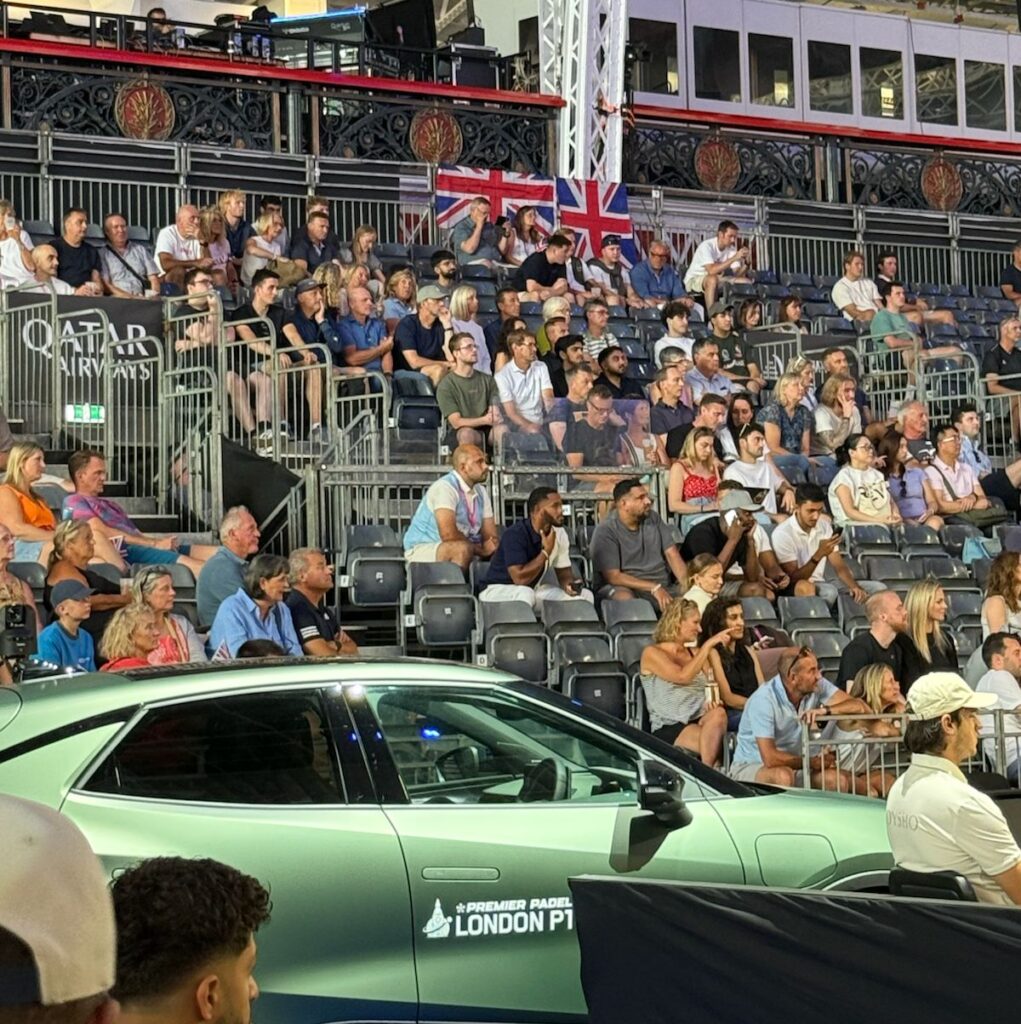
As with any first-time tournament, filling the stands in the opening days is never guaranteed. Yet there was a clear, collective effort from FIP (International Padel Federation), the players, the LTA and the media to give momentum to this historic first Premier Padel event in central London.
By the close of play on the first day it felt like a resounding success. The booths were busy, the atmosphere buoyant, the crowds partisan and the sense of occasion genuine.
Let me incite you to attend. Tickets are scarce for the remaining days but Ticketmaster will direct you to verified re-sale options. You can also follow the action live through the Premier Padel YouTube channel. But if you can make it to Olympia, do. Watching padel live — even at the practice courts — is more instructive, more visceral and, I dare say, considerably more fun. 🎾
* Individuals featured in this article who’ve been guests on Minter Dial’s Joy of Padel podcast:
– Aimee Gibson – https://www.minterdial.com/2025/10/aimee-gibson/
– Alix Collombon (en français) – https://minterdial.fr/2025/3/padel-alix-collombon-thomas-leygue
– Ksenia Sharifova – https://www.minterdial.com/2025/04/ksenia-sharifova/