
From RNA to Ireland, Edel Clarke’s padel journey
As featured in the latest issue of The Bandeja, padel in Ireland is flourishing, with the fastest-growing sport in the world poised to take the island by storm. Journalist Neil Goulding follows up his report in the magazine with an insight into Druid Padel and its co-founder Edel Clarke.
On paper, padel’s explosion in Ireland looks sudden – a flurry of new courts, packed booking systems and a sport that seems to have arrived almost overnight. Behind much of that momentum is Edel Clarke, now deeply embedded in the fabric of Irish padel and almost every serious conversation about the sport’s future in Ireland.
Where some may have chased rapid growth, Clarke has been far more interested in something slower and harder to build: communities, pathways and permanence; she does not speak about padel in the language of trends or novelty: “For me, padel is infrastructure, education and opportunity,” Clarke said. “If you don’t build it properly from the ground up, it doesn’t last.”
Through Druid Padel, the company she co-founded, Clarke is not simply introducing a new game to Irish sport – she is redefining how that game should grow. And, unlike many of padel’s new powerbrokers, Clarke did not arrive from private equity or property; her roots are in coaching, marketing and elite sport, shaped by nearly a decade working with the Rafa Nadal Academy in Mallorca, where padel exists not as an add-on but as part of daily sporting life.
Nadal Academy
Clarke’s journey into padel was anything but inevitable. A former professional tennis coach, she built her early career in Ireland before a chance conversation in Mallorca changed its direction. After meeting representatives from the Nadal Academy, she was invited to observe training, then offered a role that would see her transition from coaching into the commercial side of one of the world’s most famous sporting institutions.
“That was where everything changed,” Clarke said. “I went from just teaching sport to learning how sport is built, marketed and scaled.”
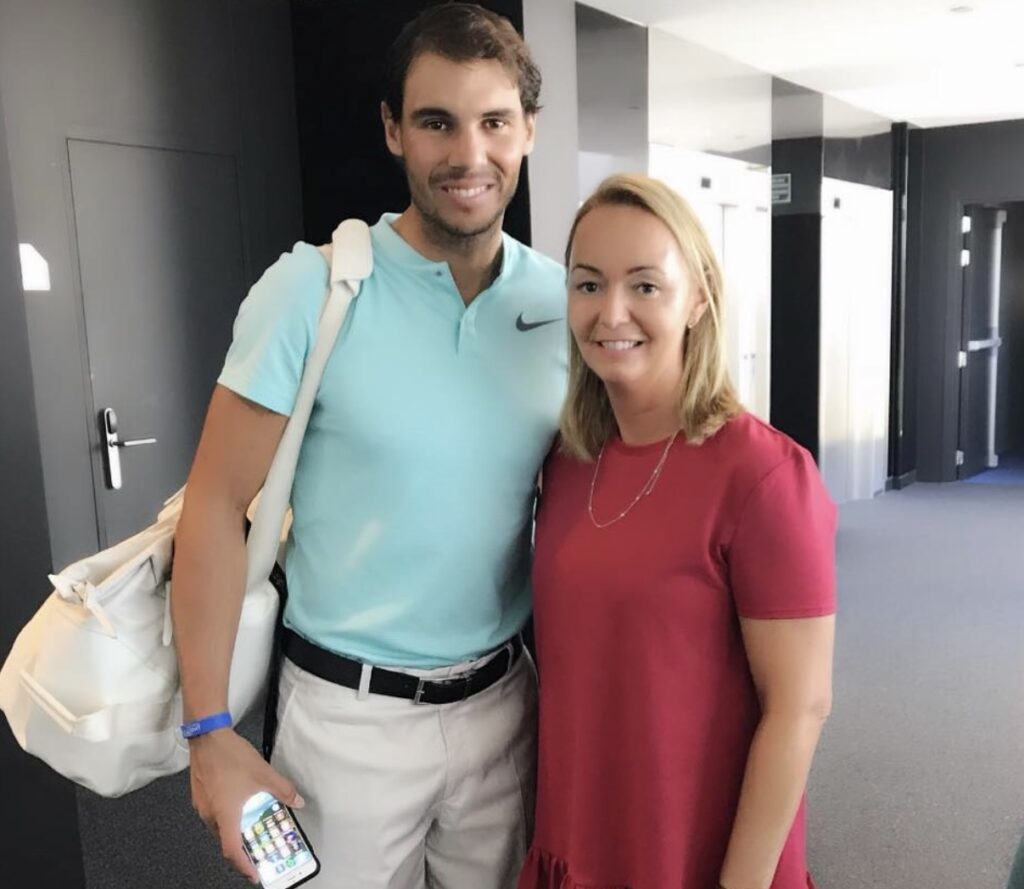
At the time, the academy had just six padel courts. Today it has more than 20, mirroring the sport’s extraordinary growth across Spain. But Clarke’s interest was never confined to the professional game. What struck her most was padel’s accessibility.
“Everyone played padel,” she recalled. “Not just elite athletes. Families, juniors, tourists – it was social, competitive, inclusive. It was part of daily life.”
Ireland, she knew, was a long way from that reality. Despite padel having been present in Ireland for almost a decade, its growth had been fragmented and slow. Clarke saw both a gap and an opportunity. Returning home, she co-founded Set To Win with Eileen Ring, becoming one of the first companies dedicated solely to padel court installation in Ireland.
At the time, most courts were being imported through the UK. There was little domestic infrastructure, and even less understanding of how the sport could be properly developed.
Over three years, Set To Win became Ireland’s most prolific padel court installer, supplying tennis clubs, hotels, private homes and leisure centres nationwide. But Clarke was already thinking beyond concrete and glass.
“Court installation is a short-term business,” she said. “Five to seven years is where you peak. But if padel is to succeed here long-term, you need clubs, coaching, juniors and pathways. You can’t just drop courts and hope for the best.”
It was a lesson she had seen play out elsewhere. In Sweden, padel exploded almost overnight, fuelled by speculative building and aggressive investment. Just as quickly it collapsed. Courts were left unused. Businesses folded. The sport’s reputation suffered.
“That’s what happens when you build without community,” Clarke said. “You can’t skip that part.”

The turning point in Clarke’s own story came in 2024, when global sports marketing company Druid Sport approached her. It was exploring padel in Ireland and kept encountering Set To Win – often finding Clarke’s team already ahead of them.
“They used to say ‘the padel ladies were here already,’” Clarke laughed.
Druid Sport brought something different: experience working with elite sporting brands, sponsorships, federations and global commercial rights. Clarke brought padel expertise, installations and deep local knowledge. The merger formed Druid Padel – a company designed not just to build courts, but to build clubs, systems and culture.
Demand
Today, Druid Padel operates as both Ireland’s leading padel court installer and one of its fastest-growing club operators, with Clarke at the helm of Irish development. The company’s first club opened at Sportsco in Dublin 4 in March 2025 with two outdoor courts. Within months it had more than 500 padel members and had hosted nearly 50 corporate events.
“The demand surprised even us,” Clarke admitted. “Two uncovered courts in Ireland — and they’re full every evening.”
The location was chosen deliberately. Sportsco sits between affluent Dublin 4 and the working-class community of Ringsend. For Clarke, that mattered: “Padel has to be accessible,” she insisted. “If this sport is going to thrive here, it has to belong to everyone.”
Druid’s second site, at Coolmine Rugby Football Club in Dublin 15, reveals one of Clarke’s strategies: embedding padel into Ireland’s traditional sporting institutions.
Coolmine now hosts three covered courts, with a fourth under construction, alongside a modern clubhouse and social space. It is a padel venue, but it is also very deliberately a club within a club.
“We see rugby and football clubs as natural homes for padel,” Clarke explained. “Rugby players retire young. They’re used to club culture, routines, camaraderie. Padel keeps them involved and it brings new people into their clubs too.”
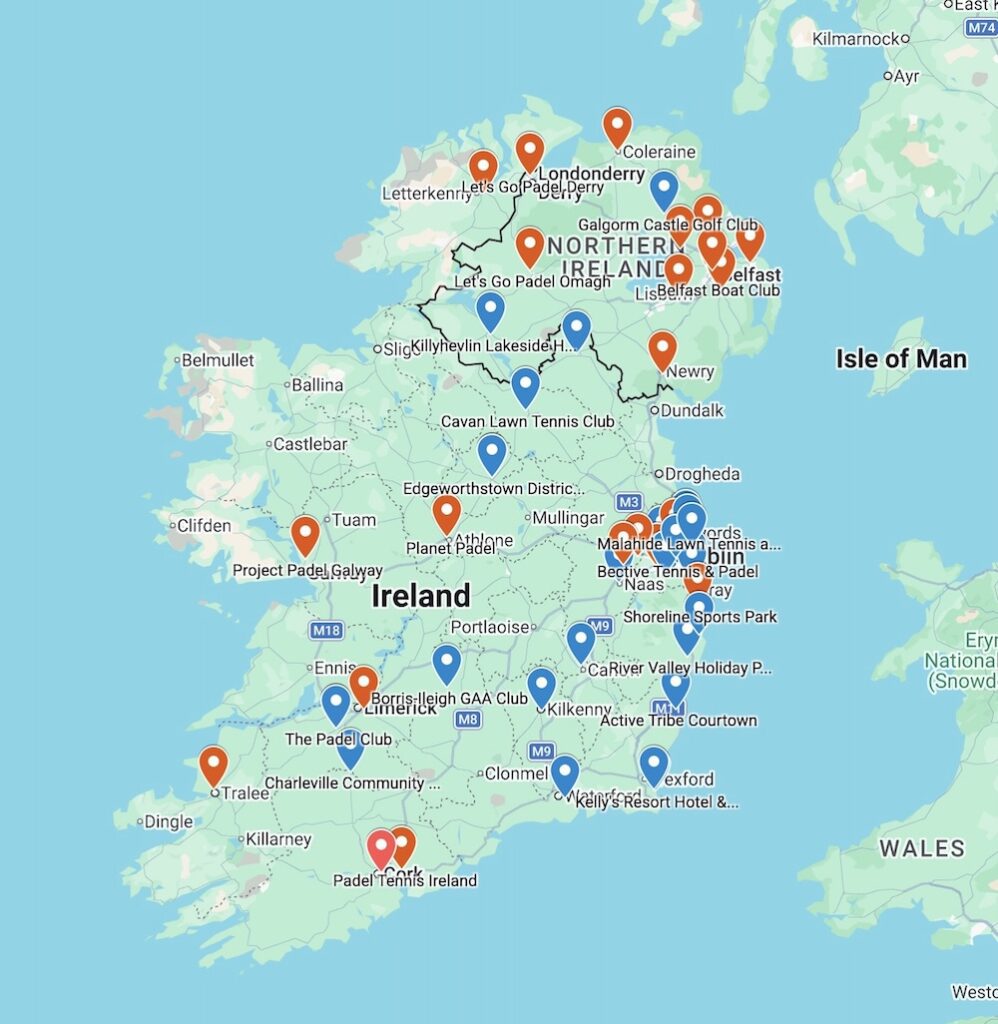
That dual benefit – continuity for existing members and new revenue streams for clubs – has made Druid Padel a highly attractive partner for sporting institutions across Ireland. Deals are already in place with Bray Wanderers FC, Buccaneers RFC in Athlone and several others, with up to eight Druid Padel clubs projected by the end of 2026.
But what truly sets Clarke’s model apart – and that of other like-minded operators – is her refusal to treat padel as a simple ‘pay and play’ product.
“There’s one approach where you just drop courts into every town and hope people figure it out,” she said. “But if someone in a town of 3,000 sees padel for the first time, how do they learn? Who teaches them?”
Instead, every Druid Padel site includes coaches, free beginner sessions, structured group coaching, social leagues and junior academies. Coaches are embedded in each club, not shared freelancers drifting between venues.
“Consistency matters,” Clarke said. “Our coaches are part of our team. They work off the same sheet. That’s how you build quality.”
Junior development sits at the heart of that vision. Druid Padel is rolling out academies across all locations, with a strong emphasis on schools and Ireland’s Transition Year programme.
“We want kids on our courts,” Clarke said simply. “They are the future of the sport. If you don’t invest there, everything else is temporary.”
There is also a deliberate focus on retaining teenage girls in sport – a demographic that traditionally drops out around the age of 13 or 14. “Padel is brilliant for that,” Clarke said. “It’s social, it’s fun, it’s competitive without being intimidating. It keeps girls engaged in sport when many others lose them.”
Her ambition does not stop at participation. Clarke wants Ireland producing elite players too.
“Druid Padel would love to build Olympians,” she said. “Why not? We have the chance to do this properly from the start.”
To that end, Druid Padel has leveraged Clarke’s ongoing relationship with the Nadal Academy to bring elite Spanish coaches to Ireland for free community sessions, as well as hosting Rafa Nadal social padel leagues – a first for the country.
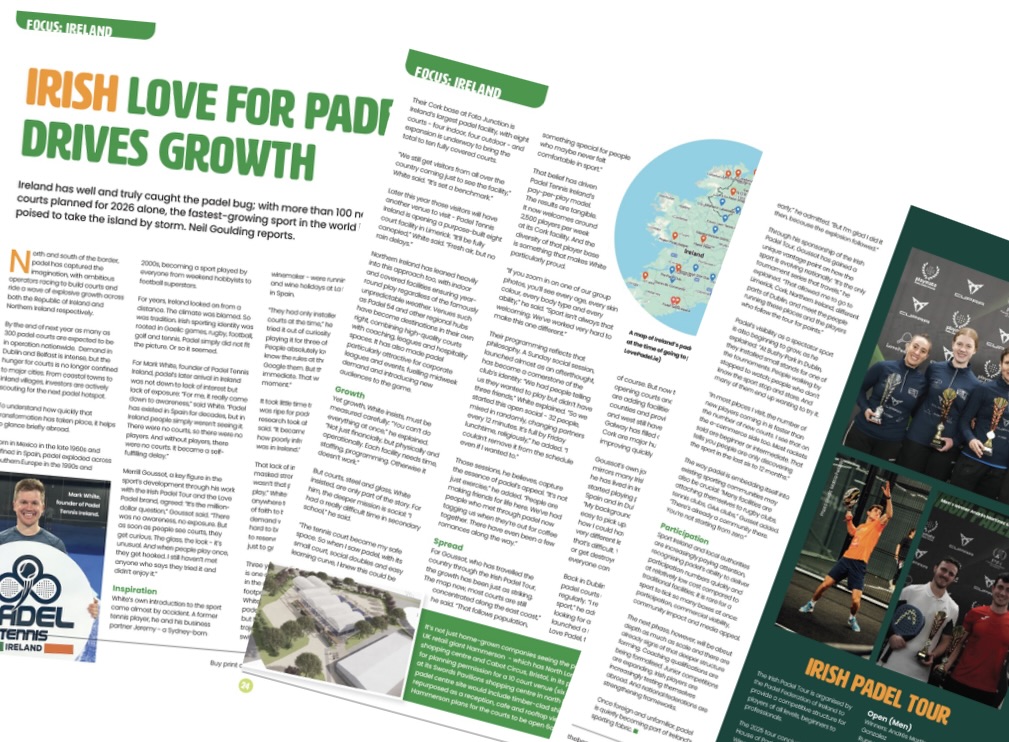
Read more about the Irish padel scene in the latest issue of The Bandeja. Click here to read or click here to buy the magazine.
Partnerships
On the commercial side, Druid Padel has secured exclusivity with Babolat for padel in Ireland, alongside partnerships with leading court providers and canopy systems. Clarke is unapologetic about her preference for premium infrastructure.
“We want the best courts, the best products, without charging mad money,” Clarke said. “If people experience quality from day one, their relationship with the sport changes.”
It is this blend of commercial sharpness and grassroots commitment that makes Clarke a uniquely influential figure in Irish padel. She understands both the balance sheet and the baseline.
Her outlook on the sport’s future in Ireland is cautiously optimistic: “Over the next five to six years padel will be in every major town in Ireland,” she predicted. “But it can’t just be courts everywhere. It has to be communities everywhere.”
Edel is particularly vocal about the need for governance and national leadership. While the UK has brought padel under the LTA’s umbrella, Ireland still lacks a unified structure. “We need someone driving this nationally,” Clarke said. “It can’t just be commercial. It has to be grassroots.”
That grassroots focus extends to councils and local authorities, with Druid Padel rolling out community programmes with Dublin City Council in 2026, aimed at widening access and participation across socio-economic lines.
Despite the scale of her ambition, with plans also underway for clubs in the UK, the US and Saudi Arabia, Clarke remains deeply grounded in why she entered the sport in the first place.
“When it stops being exciting and fun, I’m out,” she laughed. “But right now, it’s brilliant.”
In an Irish sporting landscape often dominated by tradition and tribalism, padel feels refreshingly open – and Clarke’s influence is helping ensure it stays that way. 🎾