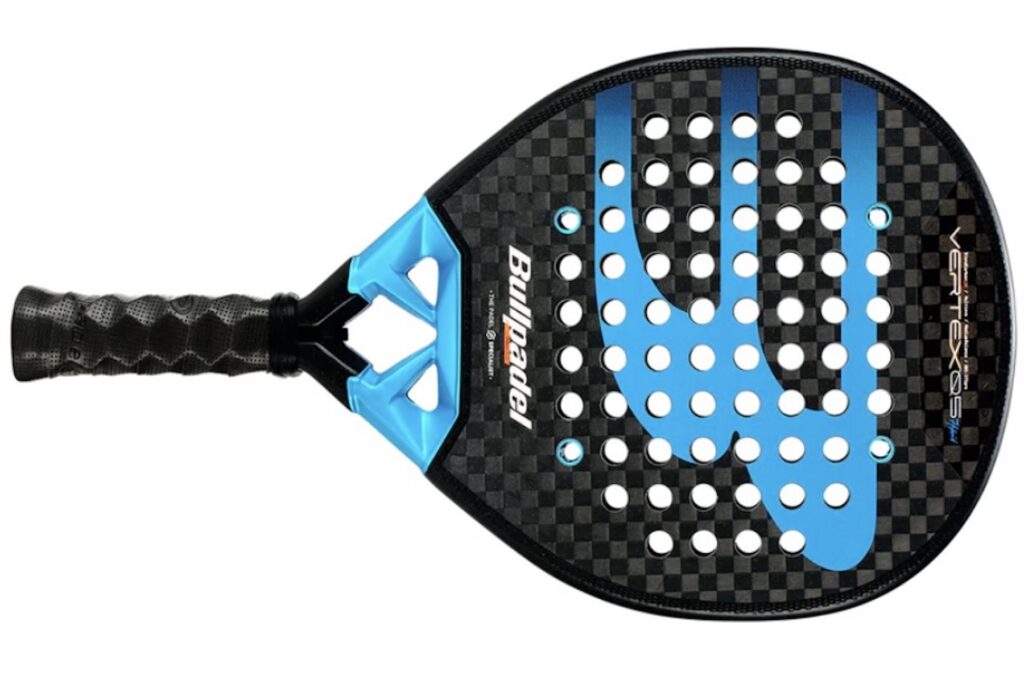

What is padel racket balance?
Jake Whalley, of MRH Sport, explains why understanding padel racket balance can help you find the racket most suited to you and your style of play.
Racket balance is one of those specs you might overlook, but it has a huge impact on how a racket behaves in your hand. It refers to where the weight of the racket is concentrated—towards the handle, the head or evenly across. There are three general categories: low balance, medium (even) balance, and high balance.
Low balance rackets keep the weight closer to your grip. They’re easy to manoeuvre, feel lighter during play and are perfect for control-based players or those dealing with joint strain. You’ll react faster at the net and feel more in control on slower balls, but you’ll sacrifice a bit of power on big hits.
🎾 Medium balance is the best of both worlds. These rackets are often teardrop-shaped and provide a nice mix of power and control. They suit a wide range of playing styles and are a safe starting point for intermediate players looking to find their rhythm.
🎾 High balance means the weight is up in the head. That translates to more power when you’re swinging freely, especially for overheads and volleys. The downside? It can feel heavier in fast rallies, and it’s less forgiving if your timing is off.
Balance also interacts with weight and shape, so don’t look at it in isolation. A 370g diamond-shaped racket with a high balance is a very different beast from a 370g round-shaped one with a low balance.
Your ideal balance point is the one that complements – not complicates – your playing style.🎾

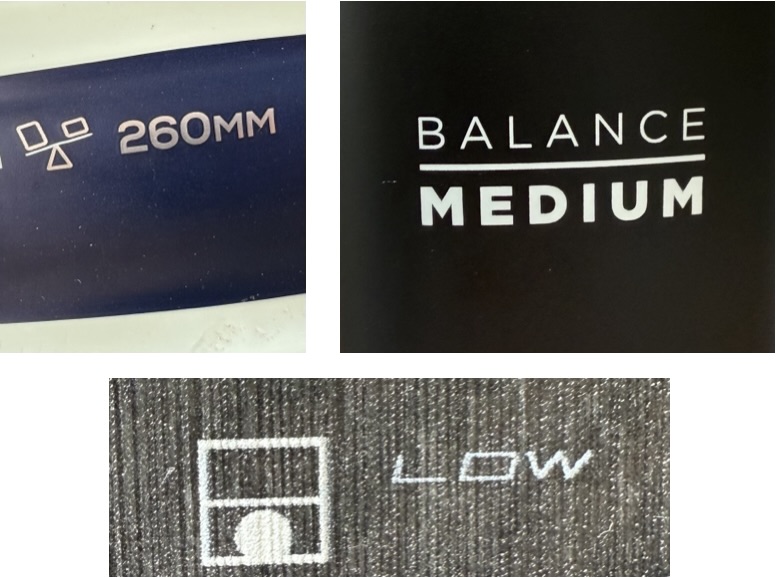
What you might see on your racket to indicate its balance.